Your fuse board may need replacing if it has rewireable fuses, no RCD protection, a wooden backboard, or trips regularly. A consumer unit upgrade usually takes one to two hours plus testing. A condition report will confirm whether your board and wiring need work.
It usually starts with something small. The kettle goes on, the toaster goes down, and the whole kitchen goes dark. You head to the cupboard under the stairs, open a little door and find a row of white ceramic fuse holders with bits of wire in them, or a board on a wooden panel that looks like it has been there for decades. You get the power back on, but a question sticks with you: is this thing actually safe?
It is a common question, and the good news is that the warning signs are easy to spot once you know what you are looking at. Here is what to check, what a proper inspection tells you, and what replacing an old fuse board really involves.
What Your Fuse Board Actually Does
Your fuse board, or consumer unit as electricians call it, is where the power coming into your home is split into separate circuits: lights, sockets, cooker, shower and so on. Each circuit has its own protective device. When something goes wrong on that circuit, such as an overload or a fault, the device is meant to cut the power before cables overheat or someone gets hurt.
Older boards did this with rewireable fuses: a thin piece of fuse wire that melts when too much current flows. Modern boards use circuit breakers that switch off and can be reset, plus RCD protection, which watches for current leaking to earth and cuts the supply quickly if it detects a problem. That leakage is exactly what happens when someone touches a live part or a cable is damaged, so RCD protection is one of the biggest safety improvements a home can have.
In short, the board is your home's first line of defence. If it is old, worn or missing protection, it cannot do that job as well as it should.
Warning Signs Your Fuse Board Needs Replacing
You do not need to take any covers off to check most of these. Open the cupboard door and have a look.
- Rewireable fuses: If you see removable fuse carriers with wire inside rather than switches, the board is an older design. When one blows, someone has to rewire it by hand, and it is all too easy to fit the wrong rating.
- No RCD protection: Look for a switch labelled RCD, usually with a small test button marked T. If there is nothing like that on your board, your circuits are missing that protection against electric shock.
- A wooden backboard: Fuse boards mounted on wooden panels are a sure sign of age. On their own they do not mean danger, but they usually point to a board that is well overdue a look.
- Frequent tripping or blown fuses: A breaker that trips now and then is doing its job. One that trips regularly, or fuses that keep going, means something is wrong with a circuit, an appliance or the board itself.
- Heat, smells or marks: A board that feels warm, smells of burning or shows scorch marks needs checking straight away. Switch off at the main switch if you can do so safely and call an electrician.
- Black rubber cabling: If the cables going into the board are covered in black rubber rather than grey or white plastic, the wiring itself is old. That is a bigger conversation than the board alone, which we cover below.
Ticking one of these boxes does not mean your home is about to go up in smoke. It does mean it is worth getting a qualified electrician to have a proper look rather than guessing.
Worried About Your Fuse Board?
Call Trafford Electrical on 07624 263906. We give free quotes and honest advice on consumer unit upgrades right across the Isle of Man.
Call for a Free QuoteWhat a Condition Report Tells You
The surest way to know where you stand is an Electrical Installation Condition Report, usually shortened to EICR. It is an inspection and test of your whole installation, not just the board. We check the condition of the consumer unit, test each circuit and look at the wiring, accessories and earthing.
At the end you get a written report that identifies any problems and how urgent they are. That is useful in two ways. It tells you whether the board really does need replacing, and it tells you whether there are other issues, such as damaged cables or poor earthing, that should be sorted at the same time. It also stops you paying for work you do not need.
If you are buying an older property, have just moved in, or simply have no idea when the electrics were last looked at, a condition report is a sensible place to start.
What a Consumer Unit Upgrade Involves
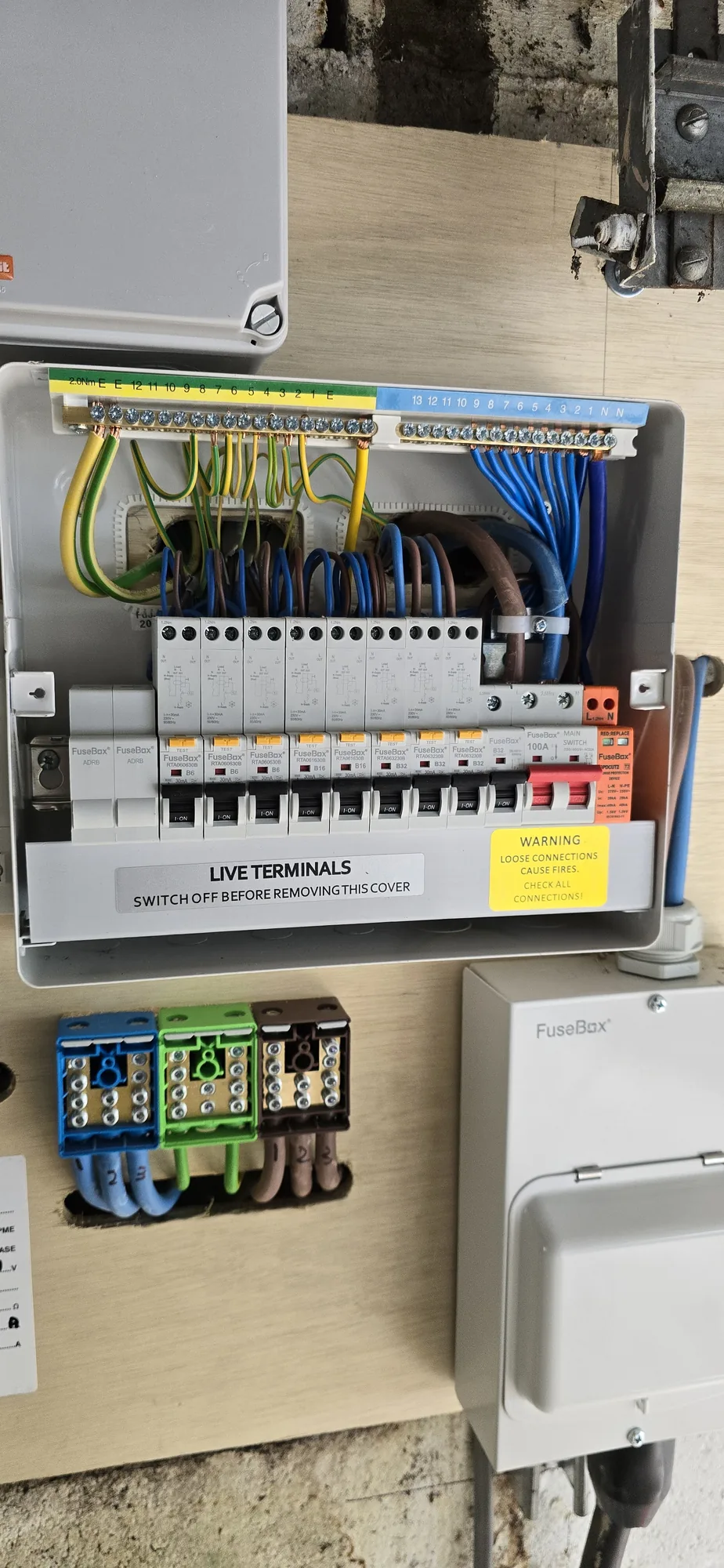
Replacing a fuse board is a lot less disruptive than most people expect. Here is how a typical consumer unit upgrade goes.
- Survey and quote: We look at your existing board and circuits and give you a free quote that is valid for 30 days. The price depends on the size of the board and what is involved.
- Power off: The supply is isolated while the old board comes out. Fitting the new one usually takes one to two hours, plus time for testing.
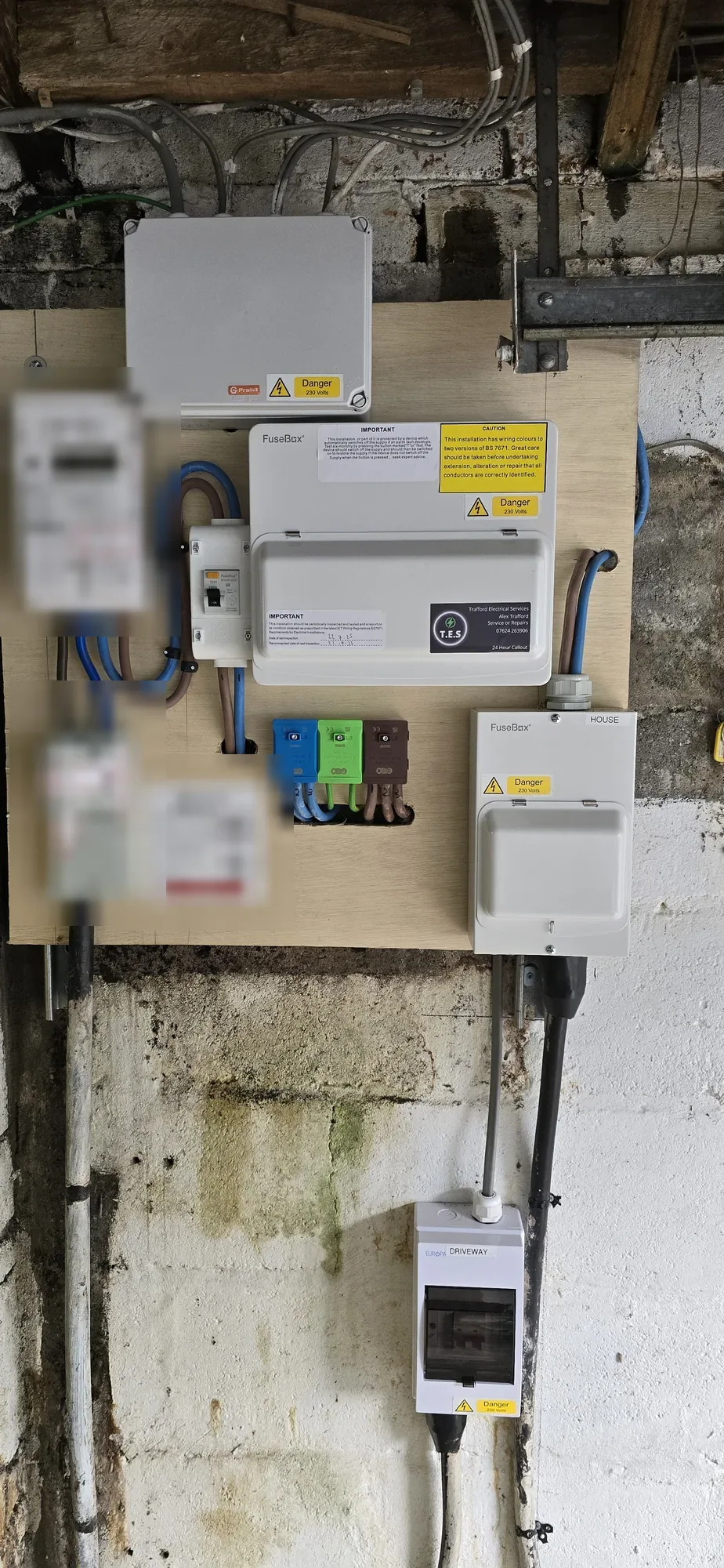
- New board fitted: The new consumer unit is installed to the current 18th Edition wiring regulations, with each circuit properly protected and clearly labelled so you know what is what.
- Testing: Every circuit is tested before the power goes back on. Testing is also where any hidden faults on the circuits show up, which is why we never skip it.
- Paperwork and guarantee: You get the certification for the work, and our workmanship is covered by a 12-month guarantee.
We keep things tidy, explain what we have done and show you how the new board works, including what to do if something trips.
When It Is More Than Just the Board
Sometimes a new board is the whole answer. Sometimes it is not. If testing shows that the wiring itself is in poor condition, swapping the board on its own will not fix the underlying problem. Old circuits can also trip a modern RCD board because the newer protection picks up faults the old fuses simply ignored. That is the board doing its job, but it means the circuit needs attention.
Black rubber cabling is the classic sign of wiring that has reached the end of its life. If that is what we find, we will talk you through the options honestly, which may include a partial or full rewire. We would rather tell you up front than fit a new board that keeps tripping.
Either way, nothing goes ahead without you knowing what it costs and why it is needed.
Frequently Asked Questions
The price depends on how many circuits you have, the size of the board and what we find during testing. We give free quotes, valid for 30 days, so you know where you stand before any work starts.
Fitting a new consumer unit usually takes one to two hours, plus time for testing every circuit. We will let you know before we start how long the power is likely to be off, so you can plan around it.
A breaker that trips is protecting you from a fault, so do not keep resetting it and hoping for the best. Regular tripping means there is a problem with a circuit, an appliance or the board itself. Get an electrician to find the cause.
Not always, but it is a good idea in an older property. A condition report (EICR) identifies problems across the whole installation, so you find out whether the board is the only issue or whether the wiring needs work too.